Traveling to Israel and thinking you’ll just rely on roaming from your home carrier? It certainly sounds convenient at first: no SIM swap, no setup hassle etc. However, the costs add up faster than most expect. Daily fees stack quickly, data limits hit, and what starts as “just checking maps and WhatsApp” turns into a pricey surprise.
Here’s a clear look at real 2026 roaming prices, typical usage, and why local Israeli prepaid SIMs or—especially—eSIMs are now the smarter, cheaper choice for almost every visitor.
What Normal Tourist Usage Actually Costs
A typical trip involves daily Google Maps navigation, constant WhatsApp messaging and calls, Instagram stories, ride-hailing apps like Gett or Bolt, and occasional video uploads or streaming. Without heavy Netflix, this averages 1–2 GB per day.
Over a 7-day visit, you’re looking at 7–14 GB. Under most daily roaming passes, that translates to $80–180 (or equivalent) just to keep your existing plan working at reasonable speeds. Skip the pass or hit overages, and costs explode even higher.
Local Israeli Plans & the eSIM Revolution
Israel’s telecom market has embraced eSIM technology aggressively. Major operators—Cellcom, Partner, Pelephone, and Hot Mobile—plus global eSIM providers now offer tourist-friendly plans with massive data at low prices.
Prepaid tourist SIMs or eSIMs typically deliver 50–150 GB (or unlimited with daily high-speed caps), local calls/SMS, and 7–30 day validity for $20–45 total. Global eSIM apps often start even lower: 10–20 GB plans for $10–25, with generous 50+ GB options in the $30–45 range.
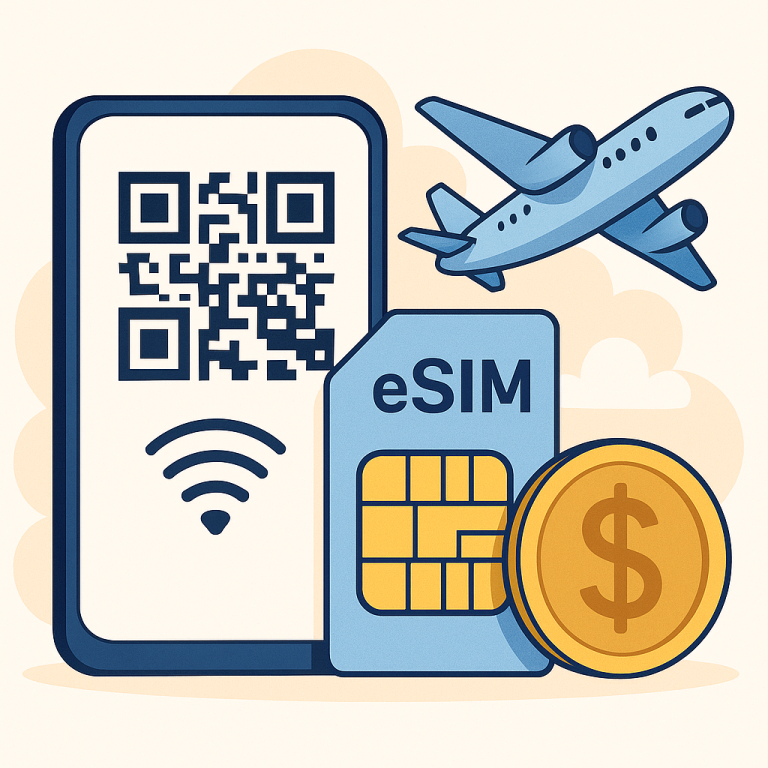
Activation is effortless: scan a QR code before departure, install remotely, and connect instantly upon landing—no airport kiosk required.
Cost Comparison: Roaming vs Local/eSIM (7–10 Day Trip)
Roaming usually totals $80–180 for moderate use, with limits and potential throttling.
A local prepaid SIM or eSIM stays in the $20–45 range—often with 3–10× more usable data, priority on Israeli networks, and zero risk of bill shock.
The difference is structural: local/eSIM solutions win on price, volume, and reliability for trips longer than 3–4 days.
Why Roaming Still Feels Appealing (But Rarely Pays Off)
Roaming wins purely on simplicity: land, enable data, and everything works instantly—no planning needed. It makes sense for ultra-short 1–2 day stops, minimal usage (<500 MB total), or corporate plans that cover Israel free.
But for standard tourism—navigation, messaging, social media—the daily fees pile up while background data (auto-backups, app refreshes) eats into allowances silently.
Key Benefits of Switching to eSIM in Israel
- Instant activation via QR code—no physical card or store visit.
- Much lower cost than roaming—often 2–5× savings.
- More data with local network priority and faster speeds.
- Dual-SIM flexibility—keep your home number active alongside the Israeli plan.
- No surprise bills—prepaid means you know the total upfront.
Practical Tips Before You Travel
- Estimate your daily data (check phone settings or past trips).
- Confirm your device supports eSIM (most phones from 2018+ do).
- Compare global eSIM providers (Airalo, Nomad, Holafly, etc.) and local operators for the best deal.
- Activate before flying—needs Wi-Fi for initial setup.
- Back up contacts and test dual-SIM if keeping your home line.
Bottom Line
Roaming in Israel works, but it’s rarely the cost-efficient option in 2026. With Israel’s thriving eSIM market and fierce competition driving prices down, a local prepaid SIM or eSIM delivers far more data, better performance, and real savings—usually $20–45 total versus $80–180+ on roaming.
For any trip longer than a few days with normal usage, calculate your needs and go local or eSIM. You’ll stay connected smarter, cheaper, and without the regret.